What progress erases
WHAT PROGRESS ERASES
It was a last-minute meeting that took me to Ho Chi Minh City.
I was in Japan when I was introduced to an apparel manufacturer who splits his life between San Luis Obispo & Tokyo, and has an apparel factory in Vietnam. He was en route to Ho Chi Minh city from Hong Kong and offered to meet me there if I wanted to learn more about apparel manufacturing for Nomada’s apparel line. I had never been to Vietnam, and the opportunity to see a factory firsthand made the decision easy. I booked the ticket.
With little time to research Ho Chi Minh City, I did what most of us do: I Googled. Best of Ho Chi Minh. Folk art Vietnam. Historic craft. Traditional Vietnamese art. On the flight over from Tokyo, I watched The Quiet American and Born on the Fourth of July—the only two films in the in-flight library connected to the country. When I landed, I checked into my hotel and immediately hit the streets.
I walked for hours through what was once called Saigon, absorbing what I could at street level, struck by how dramatically the city has changed since the eras portrayed on screen.
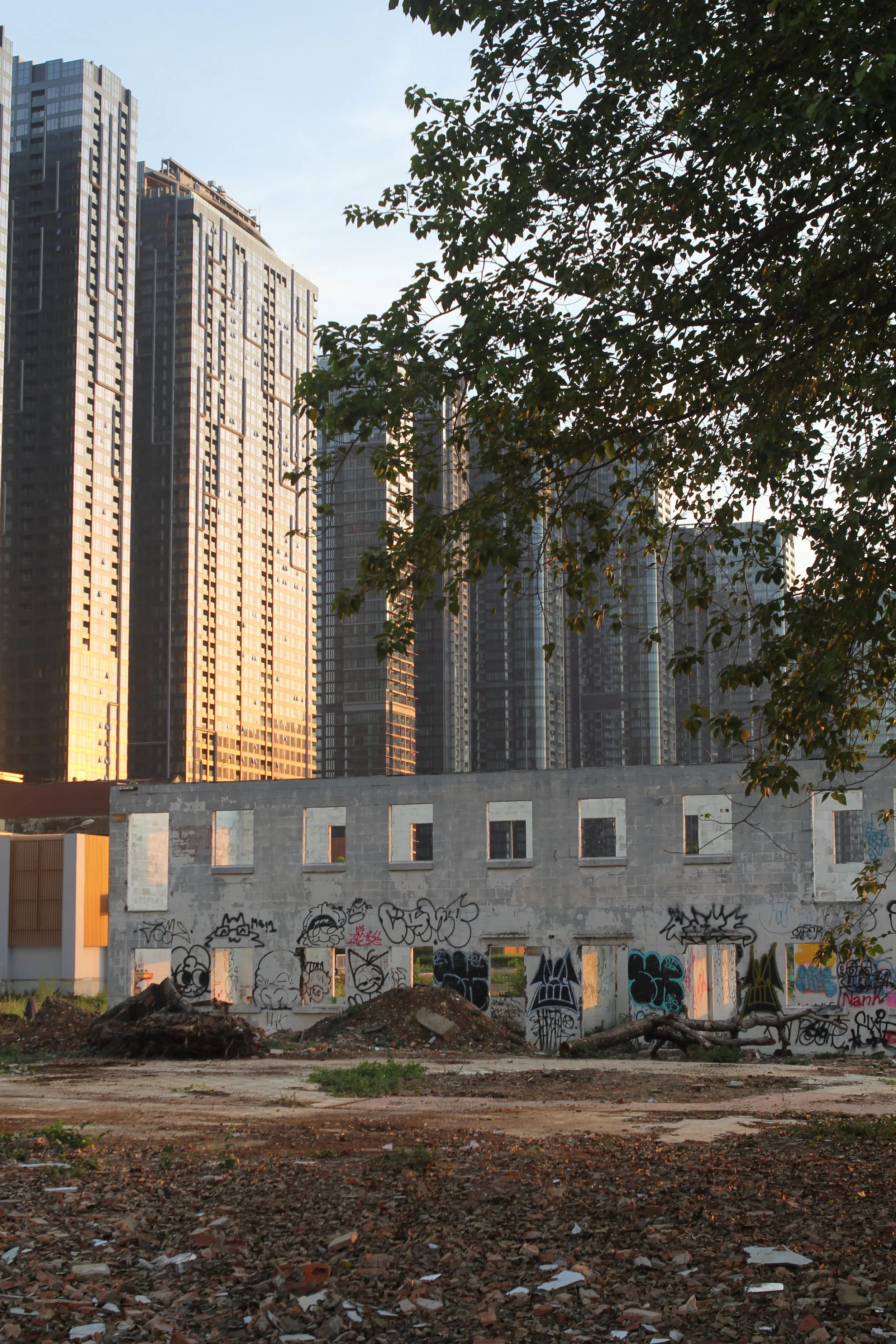
Rice paddies replaced by high-rises.
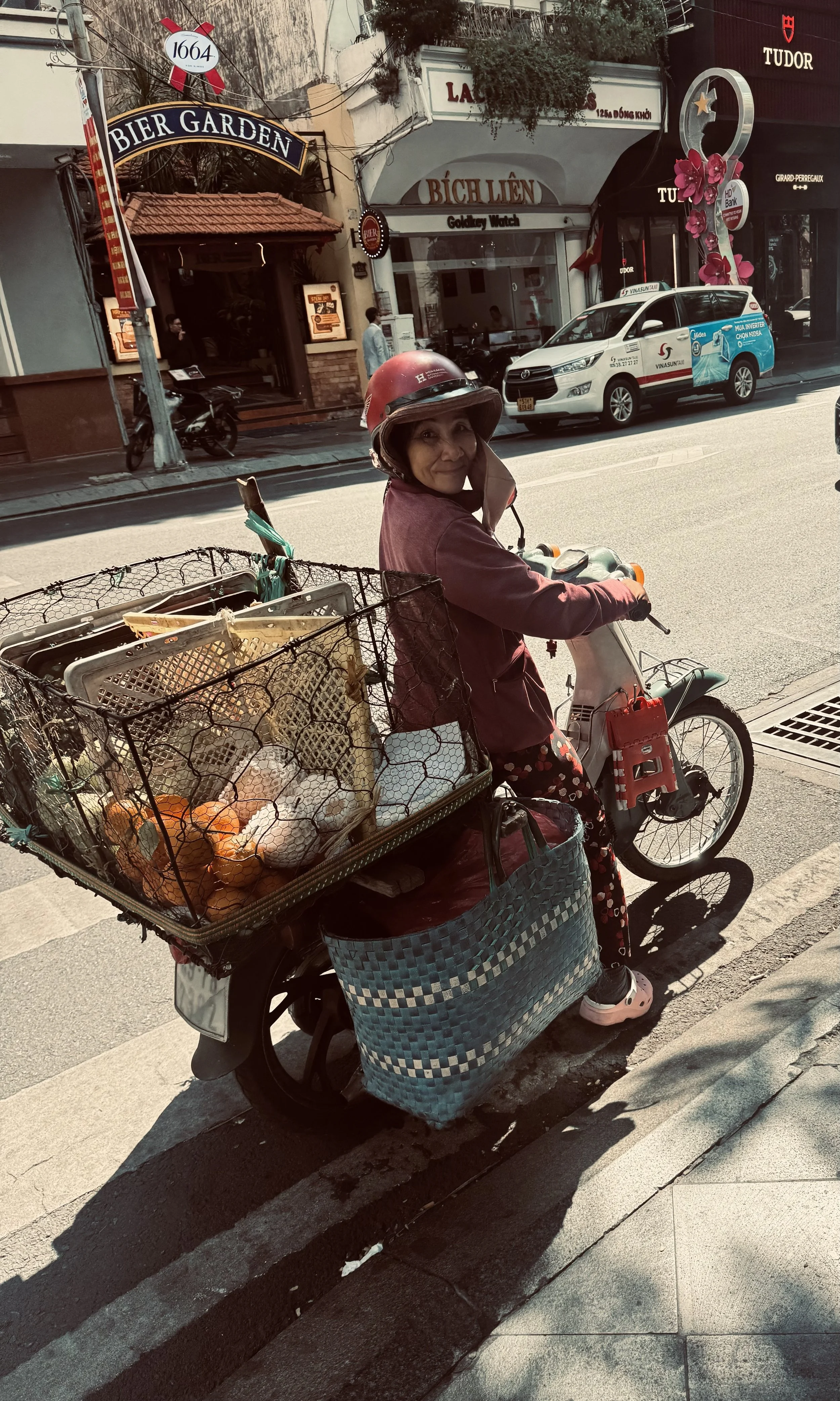
Carriages replaced by scooters.
Colonial buildings squeezed between glass towers—some finished, many not.
The city feels dense with ambition yet strangely detached from itself. High-rises; cheaply built, vacant, or unfinished, loom over streets bursting with life. American convenience stores like 7-Eleven and Circle K dot nearly every block. Western fast food and luxury brands announce themselves loudly.
And I kept wondering: Is this progress?
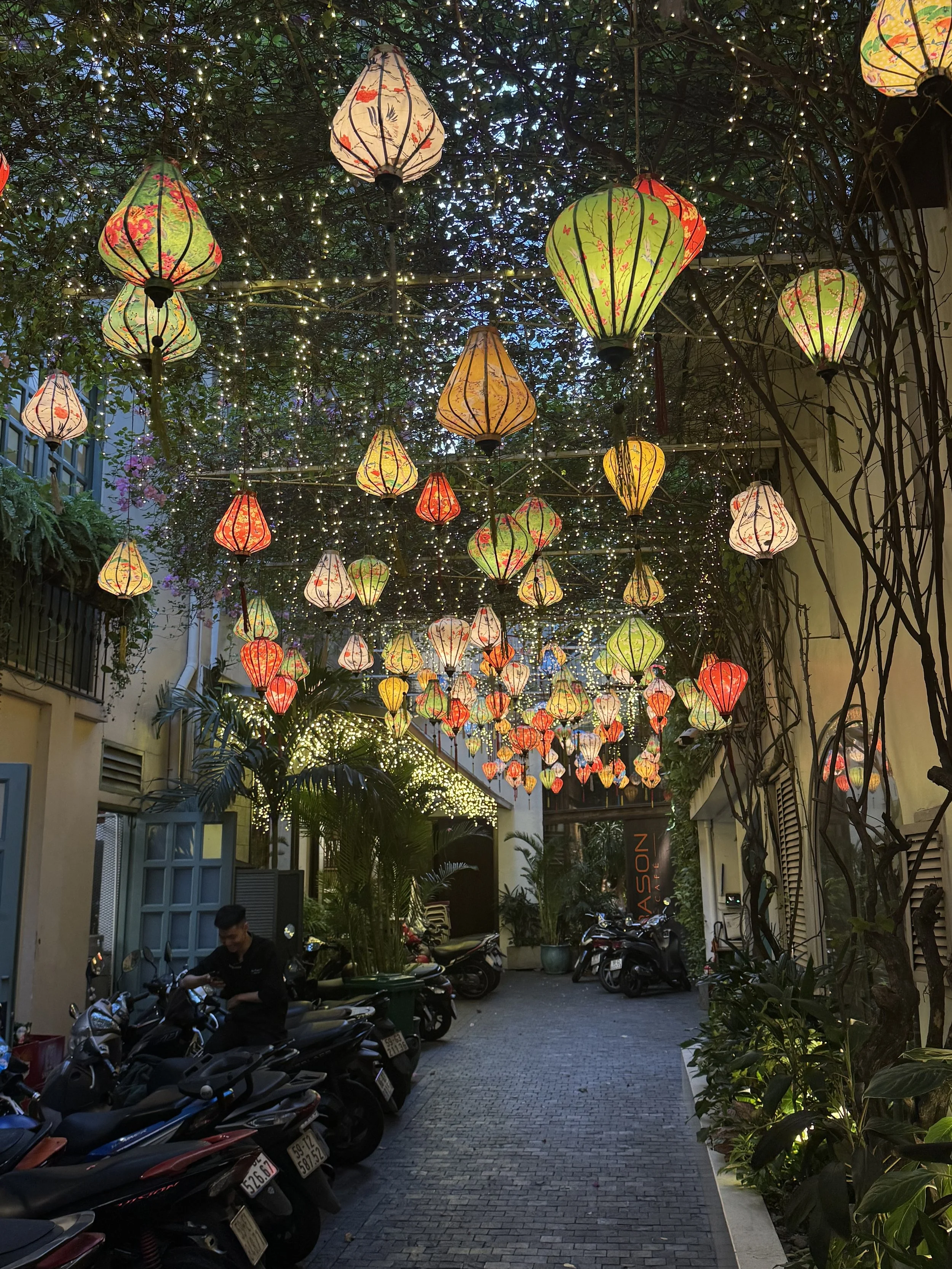
It felt less like evolution and more like erasure. Heritage traded for international brands. Ferrari showrooms next to street-food vendors. A city so rich in cuisine surely carries the same richness in art and craft, yet it was hard to find beneath the neon noise of Coca-Cola, Pepsi, McDonald’s, and Starbucks.
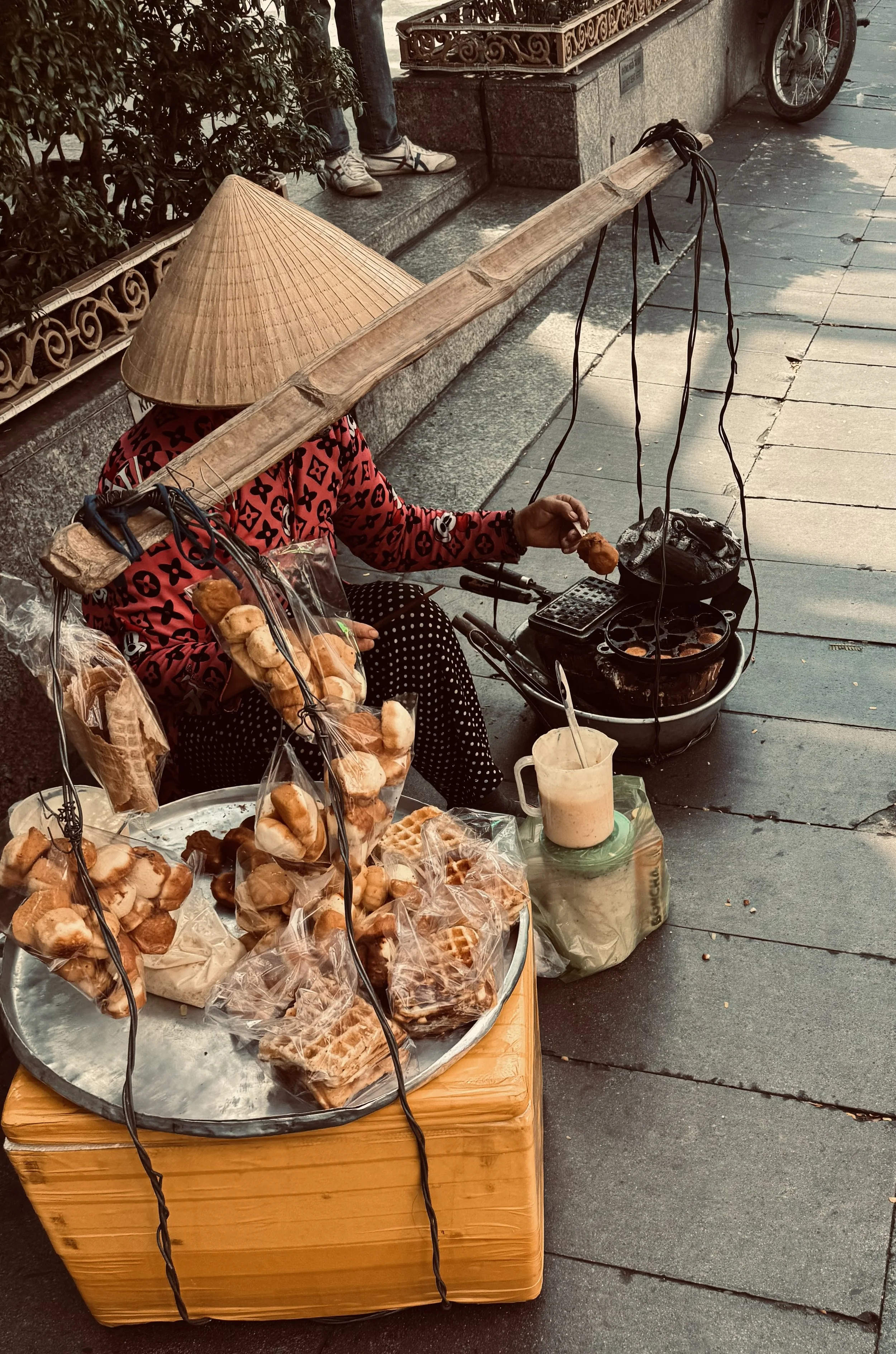
The energy of the city is infectious and deeply human, which only heightened the contrast. Incredible food is prepared and sold from scooters and stalls. People sit on tiny plastic chairs, laughing and talking while eating complex, regional dishes with centuries of history behind them.
I started to wonder if the heritage I was searching for were right in front of me. Maybe I was looking for ceramics and canvas when the craft lived in cuisine. How can McDonald’s and Starbucks compete with this? And yet, their locations were full.
That night, I met Tom and Gary, two Americans deeply embedded in Asian manufacturing. Gary’s career included developing products for Patagonia and other major surf and adventure brands. He holds multiple patents and is deeply committed to employing local workers, often women, in leadership roles throughout his empire. The conversation was thoughtful, complex, and genuinely engaging.
After dinner, Tom offered to walk me back to my hotel. As we walked, he talked about his thirty years in Saigon and how much the city had changed. Eventually, the conversation turned to the war. Tom had family members who fought in it. His son is a Marine. That history shaped his perspective.
“Even though we lost, we won,” he said. “Look at this place. The high-rises, the shopping, the hotels—we won. We turned them into consumers.”
He said it with pride.
He loved what I loathed.
Where he saw 7-Eleven, Jaguar, and Breitling as markers of success, I saw them as a decline. We were standing on the same streets, reading completely different outcomes.
It cannot be our goal to make every city interchangeable, to turn the world into one giant franchise.
Whether it’s a 1940s motel or a ceramic technique handed down through generations, things that don’t scale are always in danger of extinction. Culture, history, regional specificity, craft, imperfection, these are what tell you where you are, not just geographically, but culturally. When they disappear, they are not replaced with something equal. They are replaced with sameness.
Vietnam made that painfully clear to me. Progress, when left unchecked, becomes a form of cultural amnesia. Folk art, regional craft, and historic architecture are not relics, they are anchors. They remind us who we are and where we came from. And if we don’t value them, they will be gone, leaving us with just our screens and a Coke.