KINTSUGI

KINTSUGI
For more than five centuries, Japanese artisans have practiced kintsugi—the art of repairing broken pottery with lacquer and precious metals such as gold or silver. Rather than concealing damage, kintsugi transforms cracks into luminous seams, celebrating the vessel’s history and imperfections. Rooted in the wabi-sabi philosophy, it embraces the beauty of impermanence and the poetry of flaws.
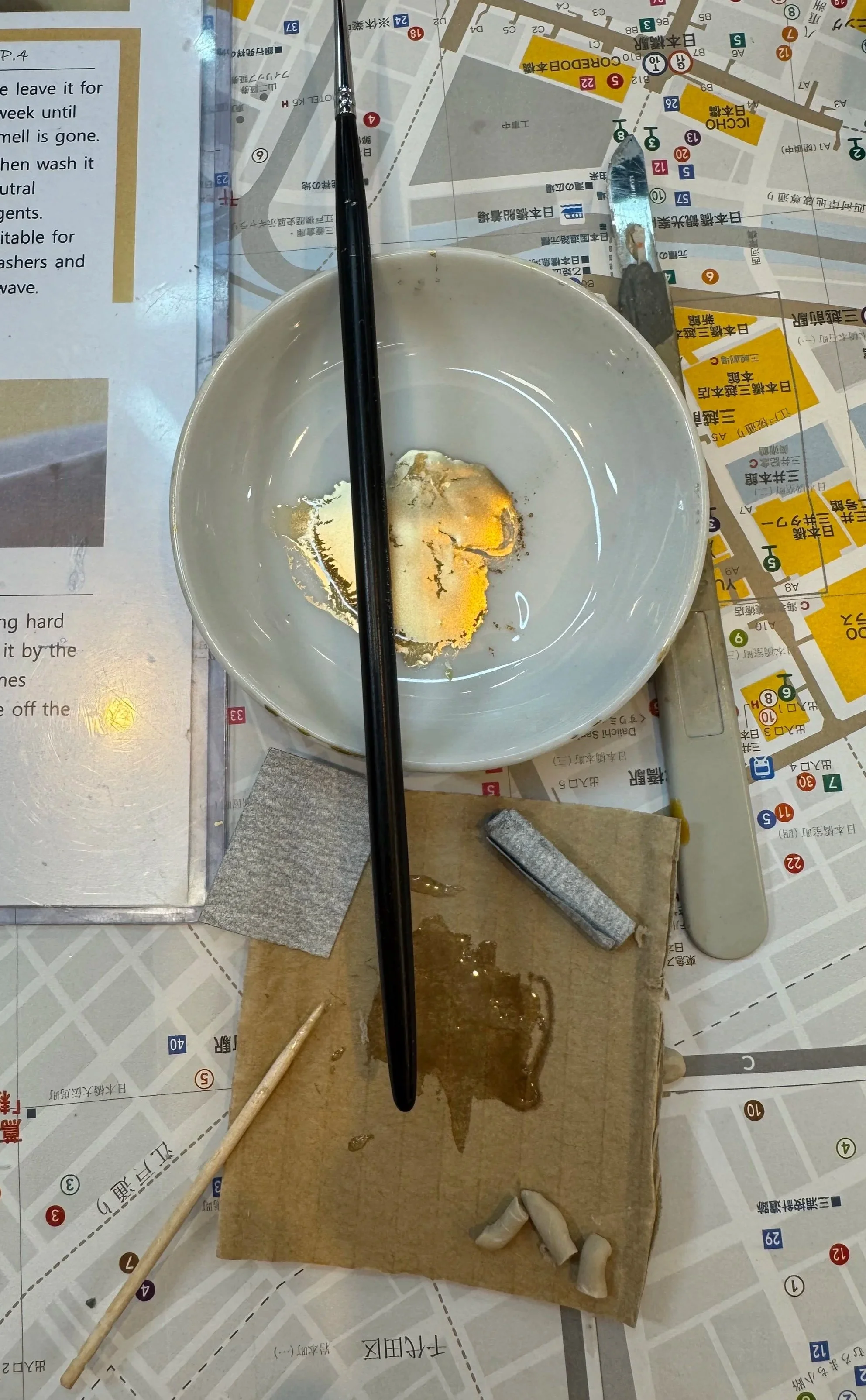
The word kintsugi translates roughly to “golden joinery.” Traditionally, artisans used urushi—a natural lacquer derived from tree sap—to bind the fragments. Once the lacquer cured, it was sanded smooth and dusted with gold, silver, or occasionally copper or platinum. The process not only restored function but also created an entirely new aesthetic, one that honored the object’s journey rather than erasing it.

The Art of Renewal
Instead of striving to return a vessel to its original state, kintsugi imagines a new identity for it. Sometimes, artists even incorporate fragments from other ceramics, creating a deliberate patchwork that deepens the object’s story and extends its history beyond a single origin.

There are three primary methods of kintsugi:
Traditional Method:
Broken pieces are carefully rejoined, with the cracks highlighted by fine lines of golden lacquer.
Piece Method (Makienaoshi):
A missing section is replaced entirely with gold lacquer, turning absence into a radiant feature.
Joint-Call Method:
A fragment from another vessel is fitted into the break, creating a striking contrast, like a puzzle piece from a different box.