WILLY GUHL: SCULPTURAL PLANTERS AND MODERNIST DESIGN
Willy Guhl: Sculptural Planters and Modernist Design
In the world of modern garden design and outdoor furniture, few names carry the quiet weight and enduring influence of Willy Guhl. I’ve used Guhl’s planters and sculptural forms in several of my own projects, and each time, the effect is unmistakable: his work grounds a space with calm, permanence, and effortless sophistication.
Let’s dive into Guhl’s history, his design philosophy, and why his fiber-cement creations continue to captivate the world.
Who Was Willy Guhl?
A Pioneer of SWISS Industrial Design, Born in 1915, Willy Guhl was a Swiss industrial designer, interior architect, and one of the leading voices of 20th-century neofunctionalism. Before becoming a designer, he trained as a cabinetmaker, an early influence that shaped his lifelong obsession with craftsmanship and material integrity.
He later joined the Zurich School of Applied Arts, first as a student and eventually as a teacher, where he mentored a generation of designers and shaped the trajectory of Swiss design.
Guhl’s early career coincided with Europe’s post-WWII reconstruction, a period defined by scarcity, practicality, and mass housing initiatives.
Rather than create elitist design objects, he focused on simple, durable, accessible furniture for everyday life. His ethos:
“Design should serve people, last for generations, and never be wasteful.”
This philosophy continues to resonate in the sustainability-focused design landscape we champion today.
The Material That Changed Everything: Eternit Fiber-Cement
Guhl’s most important breakthrough came in 1951 when he partnered with Eternit AG, a Swiss company producing a new kind of fiber-cement; a blend of cement and fiber reinforcement that was strong, lightweight, and moldable.
Why Eternit Was Revolutionary
Weatherproof & durable, making it perfect for garden planters and outdoor furniture
Flexible enough to form sculptural curves
Fire-resistant and low maintenance
A natural patina that improves with age
Long lifespan, making it an early sustainable choice
At a time when Eternit was used mostly for roofs and building panels, Guhl saw artistic possibility. This shift from industrial architecture to human-scaled design was groundbreaking.
Iconic Designs: The Planters and Furniture That Defined Guhl’s Legacy
1. The Elephant Ear Planter & Diabolo Planter (1950s)
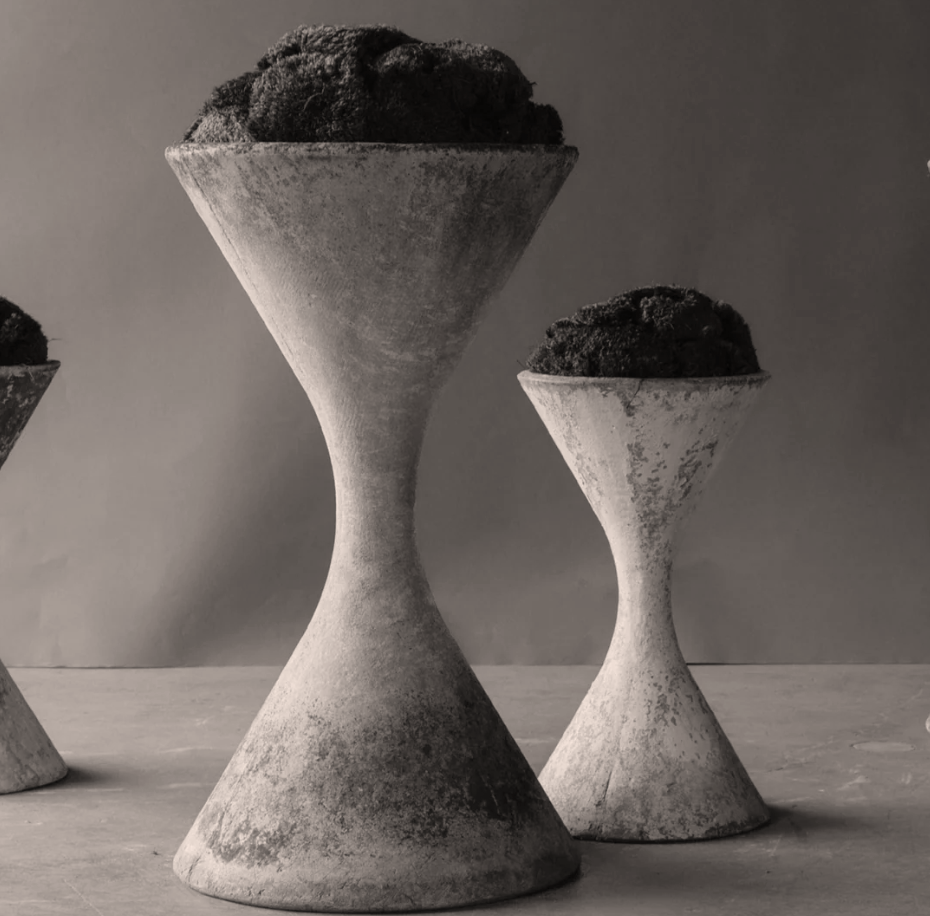
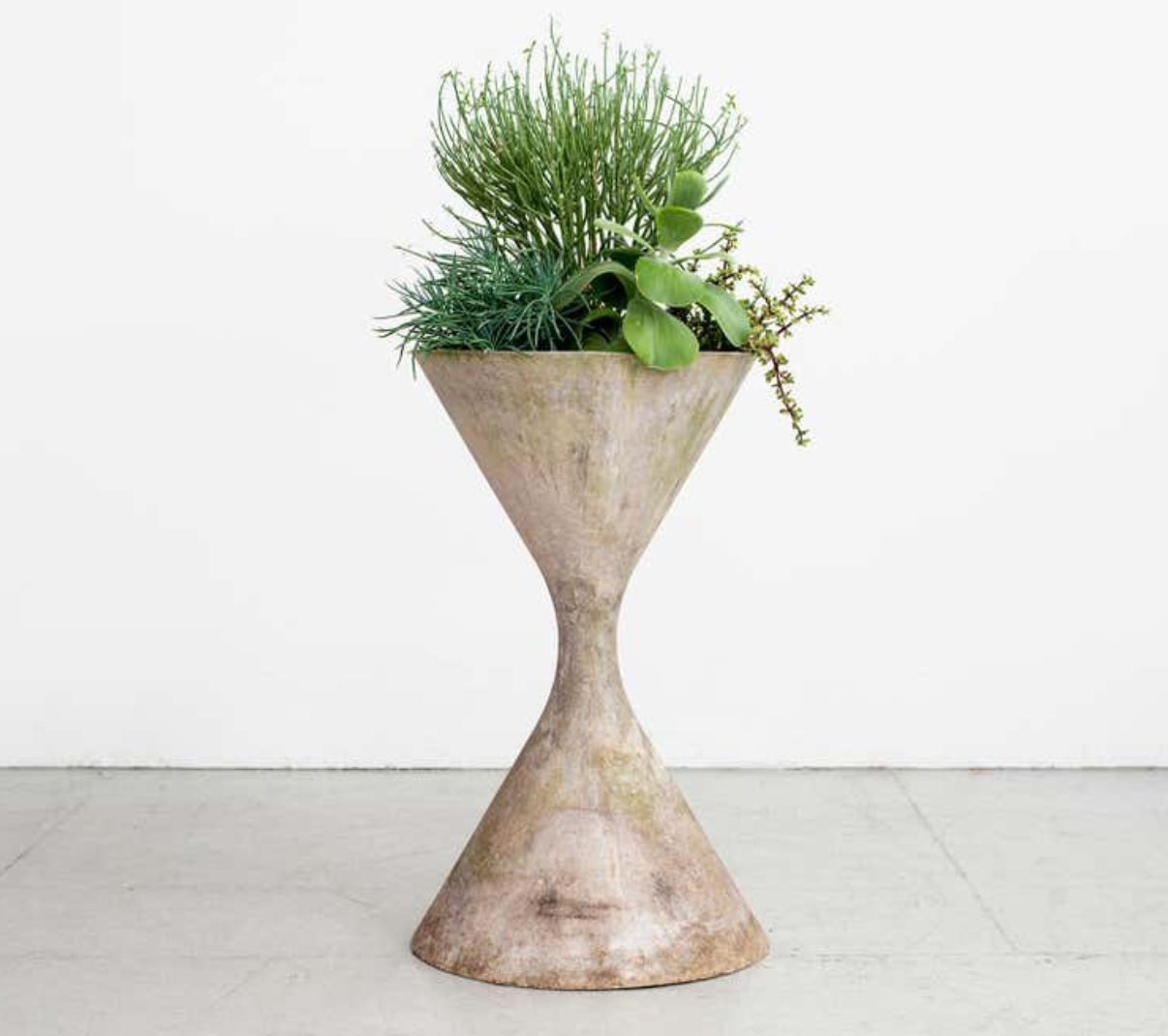
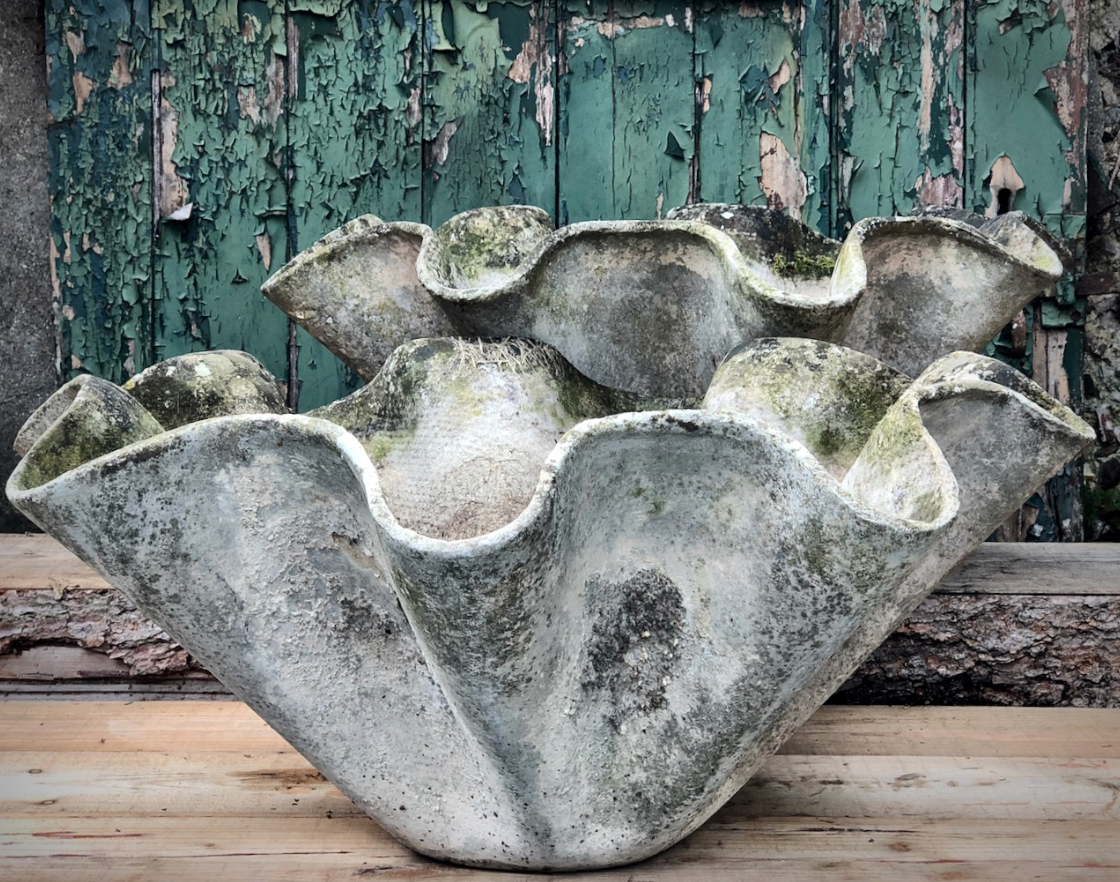
These sculptural Willy Guhl planters are now staples of modern garden design. Their simple, curved forms allow plants to shine, while the material’s texture adds depth and timeless character.
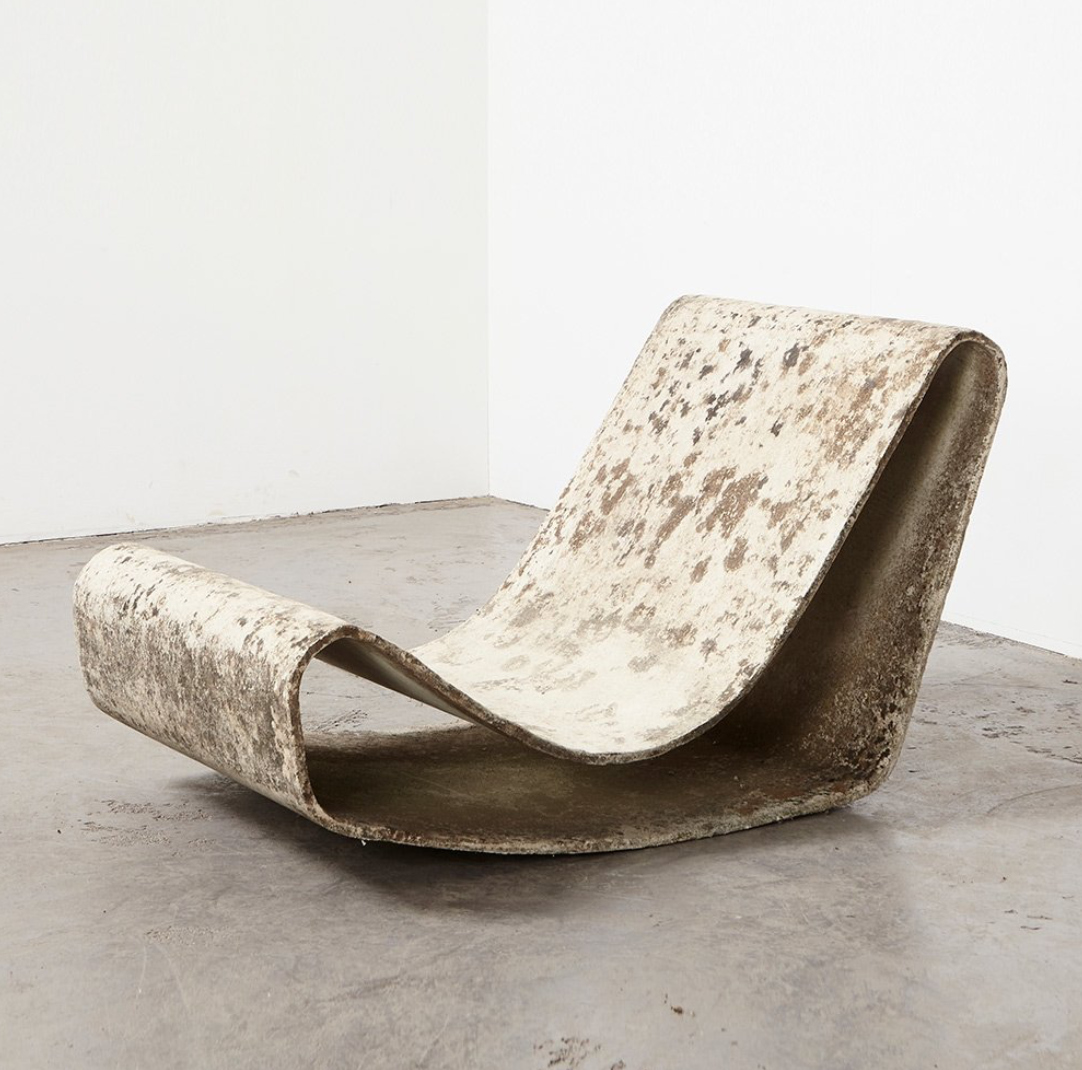
2. The Loop Chair (1954): A Mid-Century Masterpiece
Perhaps Guhl’s most famous creation, the Loop Chair is formed from a single strip of molded fiber-cement; a feat of engineering and elegance.
It embodies everything he believed in:
Minimum material
Maximum function
Sculptural beauty
Durability that outlives trends
Today, the Loop Chair is an international design icon found in museum collections, luxury homes, and high-end landscape projects.
In my own residential and hospitality design projects, Guhl’s fiber-cement planters and chairs often serve as key architectural anchors. I use them to:
Introduce sculptural form in minimalist gardens
Add material contrast against stone, wood, or Mediterranean planting
Create quiet focal points along pathways or pool edges
Balance modern lines with organic aging and texture
A single Guhl planter can completely shift the energy of an outdoor space.
Willy Guhl’s Lasting Influence on Modern Design
Though Guhl passed away in 2004, his work continues to influence modern outdoor furniture, landscape architecture, and the broader design world. His approach "achieving the most with the minimum" feels more relevant today than ever.
He proved that industrial materials can be poetic, that simplicity can be powerful, and that truly good design only gets better with time.