Artist: Hilario Alejos Madrigal
Origin: San José de Gracia, Michoacán, Mexico
Material: Clay
Technique: Pastillaje (pastille)
Dimensions: 40” H × 24” D
The Artist
Hilario Alejos Madrigal comes from one of the most celebrated ceramic lineages in Michoacán. His mother, Elisa Madrigal, was among the first artisans in the 1950s to create the now-iconic pineapple-shaped glazed punch bowls that would come to define San José de Gracia. Originally a maker of utilitarian earthenware, Elisa adapted her practice in response to growing competition, transforming everyday ceramics into sculptural objects of cultural significance.
Hilario carried this tradition forward, refining the form and elevating it to an international stage. In 1998, his work appeared on the cover of Great Masters of Mexican Folk Art, cementing his reputation as one of the region’s most important ceramic artists. Today, his son Osbaldo Alejos continues the family tradition, working alongside him in their workshop.
History & Craft
In rural Michoacán, clay is still extracted by hand from the earth, transported by donkey, and prepared using centuries-old methods. Pineapple sculptures from San José de Gracia are built using a carefully calibrated mixture of two local clays: tepetate, prized for its heat resistance, and barro fuerte, which provides structural strength and prevents collapse during firing.
Each sculpture is formed around a mold, after which every decorative element—the crown, leaves, and textured body—is applied by hand. The surface pattern is created using pastillaje, a painstaking technique in which hundreds of small clay “scales” are individually shaped, carved, and affixed to mimic the pineapple’s natural skin.
After air-drying for several days, a layer of pasta blanca is applied to prepare the surface for glazing. The piece is then fired twice in a kiln at extremely high temperatures, with glazing between firings to achieve its luminous, tactile finish.
Cultural Significance
The pineapple holds deep symbolic meaning in Mexico, long associated with hospitality, abundance, and friendship. In San José de Gracia, pineapple-shaped ceramics were originally created as poncheras; punch bowls used during celebrations, often filled with mezcal or tequila-based drinks. Over time, the form evolved from functional vessel to monumental sculpture, becoming the defining artistic expression of the region.
From the Collection
I discovered this piece in a gallery in Mexico City and originally sourced it for the lobby patio at River Lodge, where it was intended as a focal sculptural element. Ultimately, the space evolved to include a fountain instead, allowing this extraordinary work to remain available as a standalone object.
Entirely handmade and monumental in scale, this sculpture is both architectural and intimate—an heirloom-level example of Mexican folk art at its finest.
Artist: Hilario Alejos Madrigal
Origin: San José de Gracia, Michoacán, Mexico
Material: Clay
Technique: Pastillaje (pastille)
Dimensions: 40” H × 24” D
The Artist
Hilario Alejos Madrigal comes from one of the most celebrated ceramic lineages in Michoacán. His mother, Elisa Madrigal, was among the first artisans in the 1950s to create the now-iconic pineapple-shaped glazed punch bowls that would come to define San José de Gracia. Originally a maker of utilitarian earthenware, Elisa adapted her practice in response to growing competition, transforming everyday ceramics into sculptural objects of cultural significance.
Hilario carried this tradition forward, refining the form and elevating it to an international stage. In 1998, his work appeared on the cover of Great Masters of Mexican Folk Art, cementing his reputation as one of the region’s most important ceramic artists. Today, his son Osbaldo Alejos continues the family tradition, working alongside him in their workshop.
History & Craft
In rural Michoacán, clay is still extracted by hand from the earth, transported by donkey, and prepared using centuries-old methods. Pineapple sculptures from San José de Gracia are built using a carefully calibrated mixture of two local clays: tepetate, prized for its heat resistance, and barro fuerte, which provides structural strength and prevents collapse during firing.
Each sculpture is formed around a mold, after which every decorative element—the crown, leaves, and textured body—is applied by hand. The surface pattern is created using pastillaje, a painstaking technique in which hundreds of small clay “scales” are individually shaped, carved, and affixed to mimic the pineapple’s natural skin.
After air-drying for several days, a layer of pasta blanca is applied to prepare the surface for glazing. The piece is then fired twice in a kiln at extremely high temperatures, with glazing between firings to achieve its luminous, tactile finish.
Cultural Significance
The pineapple holds deep symbolic meaning in Mexico, long associated with hospitality, abundance, and friendship. In San José de Gracia, pineapple-shaped ceramics were originally created as poncheras; punch bowls used during celebrations, often filled with mezcal or tequila-based drinks. Over time, the form evolved from functional vessel to monumental sculpture, becoming the defining artistic expression of the region.
From the Collection
I discovered this piece in a gallery in Mexico City and originally sourced it for the lobby patio at River Lodge, where it was intended as a focal sculptural element. Ultimately, the space evolved to include a fountain instead, allowing this extraordinary work to remain available as a standalone object.
Entirely handmade and monumental in scale, this sculpture is both architectural and intimate—an heirloom-level example of Mexican folk art at its finest.

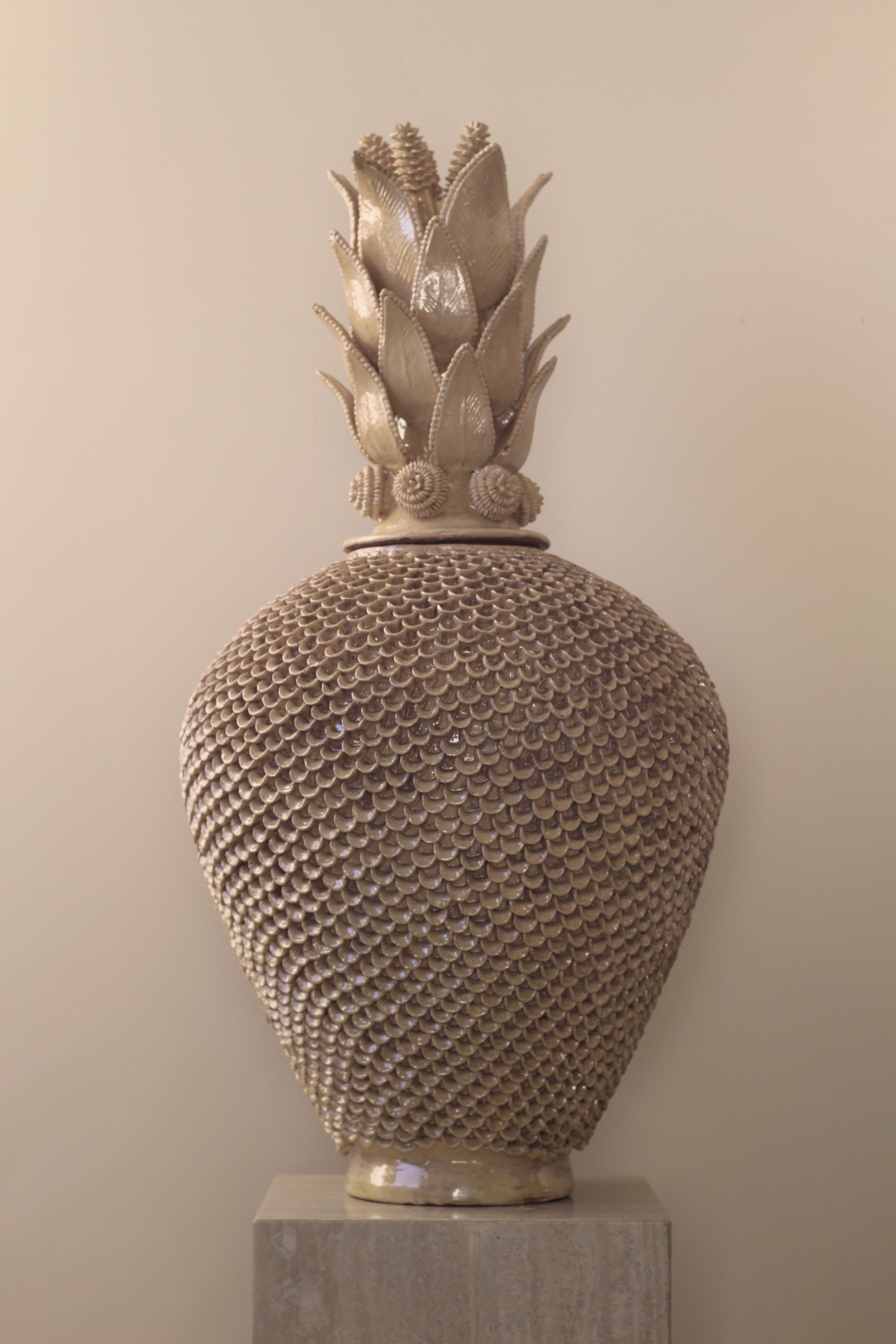 Image 1 of 3
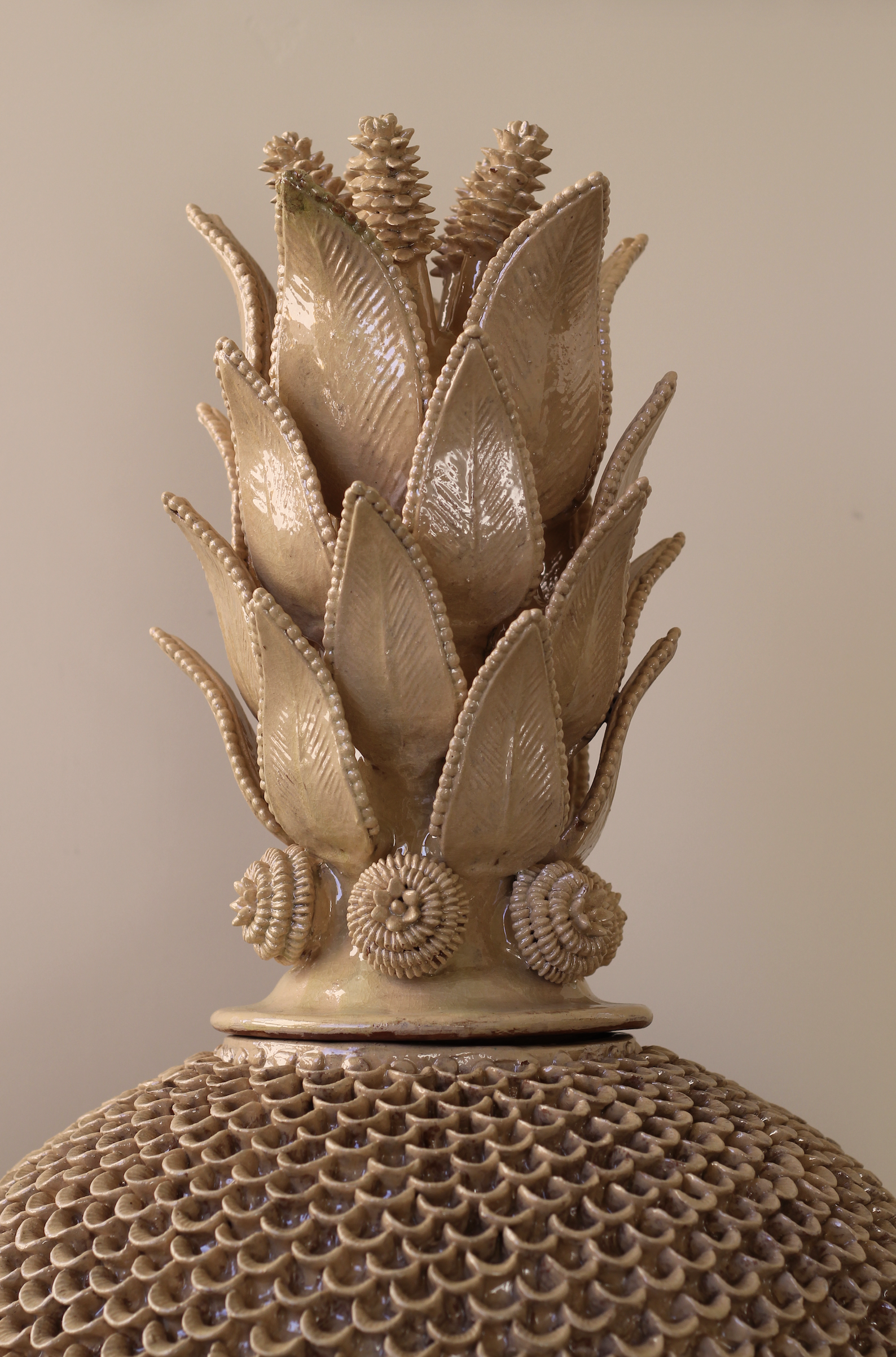 Image 2 of 3
 Image 3 of 3